Blogging goals, Pleas for Comments and Technorati


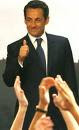
(Sarko photo from www.smh.com.au/.../2007/04/23/1177180510779.html)

So I guess I'm a little late getting with the times on the technology behind a good traffic generating blog, but in fairness to myself I'm doing this with my own particular goals in mind. My goal is to craft my points enough not to feel ashamed posting them for the grand general public at large, and through that crafting process, think through an issue for my own benefit. To that end, longer posts may be more advisable, but traffic is still desirable since the third part of the goal of making my arguments public is for the comments, and the honing and refining that can come with them.

So here's the tripartite plea:

  1. If you read something you like, COMMENT, and point out specifically what that was.

  2. If you read something you don't like, COMMENT, and point out specifically what that was.

  3. If you didn't see something you think I should have included, COMMENT, and point out specifically what that was.

And also, I'll make some efforts to engage you, the reader, by expanding the audience via more personal advertisement (I'm adding the site to my email signature as of today, and have recently meticulously gone through all my previous posts to tag them with searchable labels, providing a tag cloud to the right so you can see what topics I've done the most with and give you all something clickable that categorizes my content for you), and via registration with Technorati, a popular blog indexing service, and Feedburner, a popular RSS feed distribution service to provide more visibility for the blog itself.


Comments

Anonymous said…
What do you mean?

Popular posts from this blog

Gas price "gouging"

Blogs are meant to be frequently updated, so I'm going to try to do a little (shorter) something every day even if it's not a complete treatment of the item in question. Today, I'm thinking that there's so much to get to with the PBS special that a radical shift of topic might be refreshing, so here goes… I recently had a liberal friend of mine forward me a canvassing email from www.moveon.org , a liberal political activist site, asking me to electronically sign a petition supporting an anti-price gouging bill that was in discussion in Congress at the time. The legislation, much to my dismay, was passed, but the email conversation with my friend would make a great cut and paste here. I have heavily edited the original email to refine my arguments, to take out elements that should remain personal, and continue to establish my own internet persona. If I decide to post his replies, I'll edit even more carefully so less personal and more generally useful arguments are m...

Ron Paul and Foreign Entanglements

Ron Paul Photo from: http://www.ronpaul2008.com/about/ Sean Hannity photo from: http://www.jonesreport.com/articles/150507_ron_paul_debate.html I like Congressman and former multiple-election Libertarian party presidential candidate Ron Paul . I do. I admire him for his straight talk, and even more for the fact that he actually does walk it too. I had a conversation with a brother of mine (who I respect immensely and who has researched and thought through many of the aspects of his affiliation with Ron Paul's ideals) at our family reunion recently that helped me understand what appeal he might have in the Republican primary. So between that and a recent Michael Medved interview with him, where he answered so frankly and unapologetically that I almost had a hard time reminding myself that this was a politician, I think it's time I finally address his candidacy and policy positions. First, I espouse the fundamental libertarian ideals on most issues. I think Ron Paul is right on...

Language and Culture: wa Thiong’o and Lacan

More literary theory today from a paper I'm proud of. I may comment on Thiong'o's equation of culture with language later, but for now you need an intro… How humans determine what is self is a topic of much theoretical debate. However many of these theories of self-identification highlight the twin fundamental notions of culture and language as unavoidably instrumental in the construction of identity. The most germane of these to our discussion derives from the French neo-Freudian psychologist Jacques Lacan's extrapolations on Ferdinand de Saussure's principles of semiotics. Mainstream linguistic thought from its inception as a separate discipline in Saussure's time, has pointed out the arbitrary nature of the link between the signification of any given (linguistic) symbol and its associated signifying form (whether graphic or phonic). Dividing a sign into signifiant and signifié is a powerful way to theorize language, since it emphasizes its social nature. I...